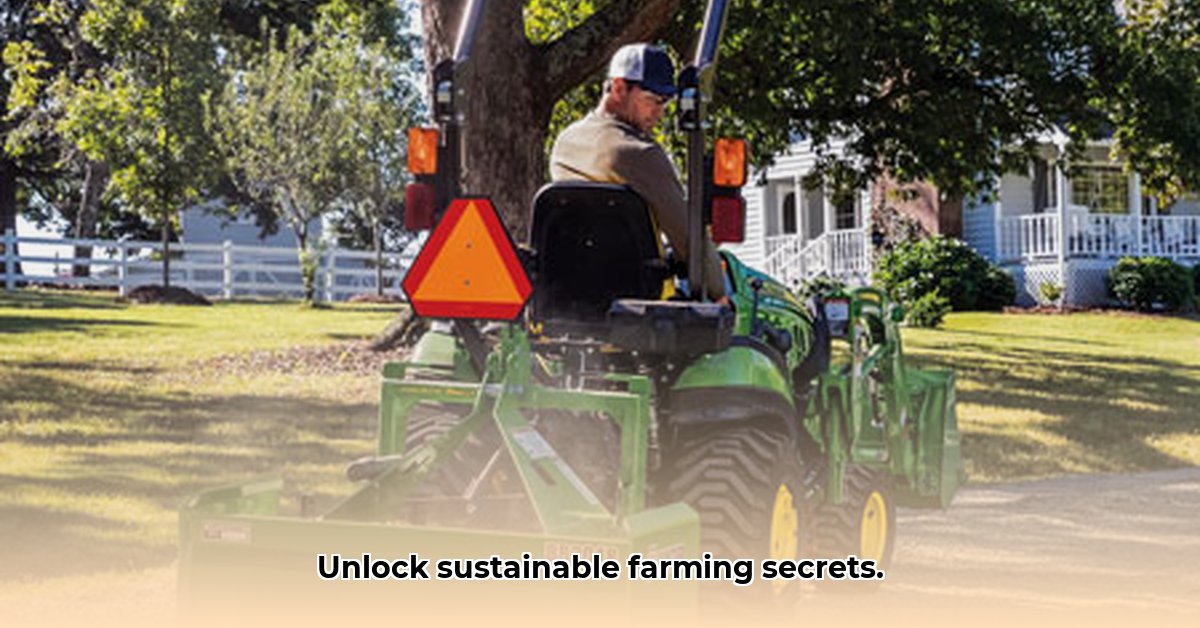
This comprehensive guide explores the diverse world of tractor implements, providing practical advice for selecting and using them effectively in sustainable agricultural practices. Whether you're a seasoned farmer or just starting out, this resource will empower you to make informed decisions that benefit your farm's profitability and environmental well-being. For more on three-point hitches, see this helpful resource: Three-Point Hitch Info.
Tractor Implements: A Categorized Overview
Tractor implements are the attachments that transform your tractor into a versatile tool for all stages of farming, from land preparation to harvesting. Understanding their functions is key to efficient and sustainable farming.
Soil Preparation Implements
These implements prepare the soil for planting, creating ideal conditions for seed germination and crop growth.
- Plows (for turning over soil): Essential for many crops, plows break up compacted soil, improving aeration and drainage. However, some sustainable practices minimize or avoid plowing to protect soil structure.
- Harrows (for leveling and smoothing): These follow plows, leveling the soil surface for a smooth seedbed, breaking up clods, and removing weeds. Different types, such as disc harrows, offer varying levels of weed control.
- Subsoilers (for deep soil loosening): These implements break up hardpan or compacted layers beneath the surface, improving water infiltration and root penetration. Ideal for heavier clay soils.
Planting and Seeding Implements
Precision planting is crucial for maximizing yields and minimizing seed waste.
- Planters (for precise seed placement): These machines precisely place seeds at the correct depth and spacing, maximizing germination. They are suitable for larger operations and offer superior accuracy compared to seed drills.
- Seed Drills (for row seeding): Simpler and more affordable than planters, seed drills are ideal for smaller farms and specific crops.
Crop Care Implements
Maintaining healthy crops throughout the growing season is vital for a successful harvest.
- Cultivators (for weed control): Cultivators remove weeds between crop rows without disturbing the plants. Essential for weed management and maintaining crop health.
- Sprayers (for precise chemical application): Sprayers apply herbicides, insecticides, and fertilizers. Modern sprayers often feature precision application technology, minimizing chemical runoff and boosting efficiency.
Harvesting Implements
Efficient harvesting is critical for maximizing yields and minimizing post-harvest losses.
- Combines (for grain harvesting): Combines cut, thresh, and clean grains in a single pass, ideal for large-scale grain production.
- Balers (for hay and straw): These implements gather hay or straw into compact bales for easy storage and transportation. Different types of balers cater to various materials and bale sizes.
- Forage Harvesters (for silage): These specialized machines harvest silage, a key feed source for livestock.
Other Essential Implements
Beyond the core categories, several other implements expand your tractor's versatility.
- Loaders (for material handling): Loaders make your tractor a powerful lifting machine, essential for moving materials, hay bales, and other supplies.
- Backhoes (for excavation): Backhoes are invaluable for digging, trenching, and post-hole digging, facilitating farm maintenance and improvements.
Choosing the Right Implements: A Sustainable Approach
Selecting implements is a significant investment. Consider these factors:
Farm Size & Scale: A smaller farm might benefit from more maneuverable implements, while larger farms might need larger equipment for efficiency. Consider the economies of scale.
Soil Type: Soil texture and composition directly affect the effectiveness of different implements. Heavy clay soils require different tools than sandy soils.
Crops: The type of crops influences your implement choices. Row crops need different tools than broadacre crops. Consider your crop rotation strategy.
Budget: Consider leasing or buying used equipment to manage costs effectively, bearing in mind maintenance expenses.
Sustainability Goals: Prioritize implements that minimize soil disturbance (like no-till practices), reduce fuel consumption, and promote efficient resource use. Precision agriculture is key.
Sustainable Practices with Tractor Implements
Sustainable farming is crucial. Optimize your practices with these techniques:
Reduced Tillage: No-till or minimal tillage significantly reduces soil erosion, enhances soil health, and lessens your environmental footprint.
Precision Application: Variable-rate technology enables targeted fertilizer and pesticide application, minimizing waste and environmental impact. It also improves cost-effectiveness.
Efficient Water Management: Employ water-efficient irrigation systems like drip or micro-irrigation, and consider soil moisture sensors for optimized watering schedules.
Responsible Disposal: Dispose of old implements and materials correctly through recycling or repurposing whenever possible.
Emerging Technologies: The Future of Farming
GPS-guided tractors and autonomous machinery are transforming the agricultural landscape. While initial investments are substantial, long-term benefits include improved efficiency, labor savings, and reduced human error. Ongoing research is crucial to understand the complete implications of these technologies.
Conclusion: Farming Smarter, Sustainably
Selecting appropriate tractor implements is vital for successful and sustainable farming. Carefully analyze your farm's unique circumstances and embrace these techniques to create a system that benefits both your farm's productivity and the environment. Remember, continuous learning and collaboration with agricultural experts are cornerstones of thriving sustainably.